
Brand new day
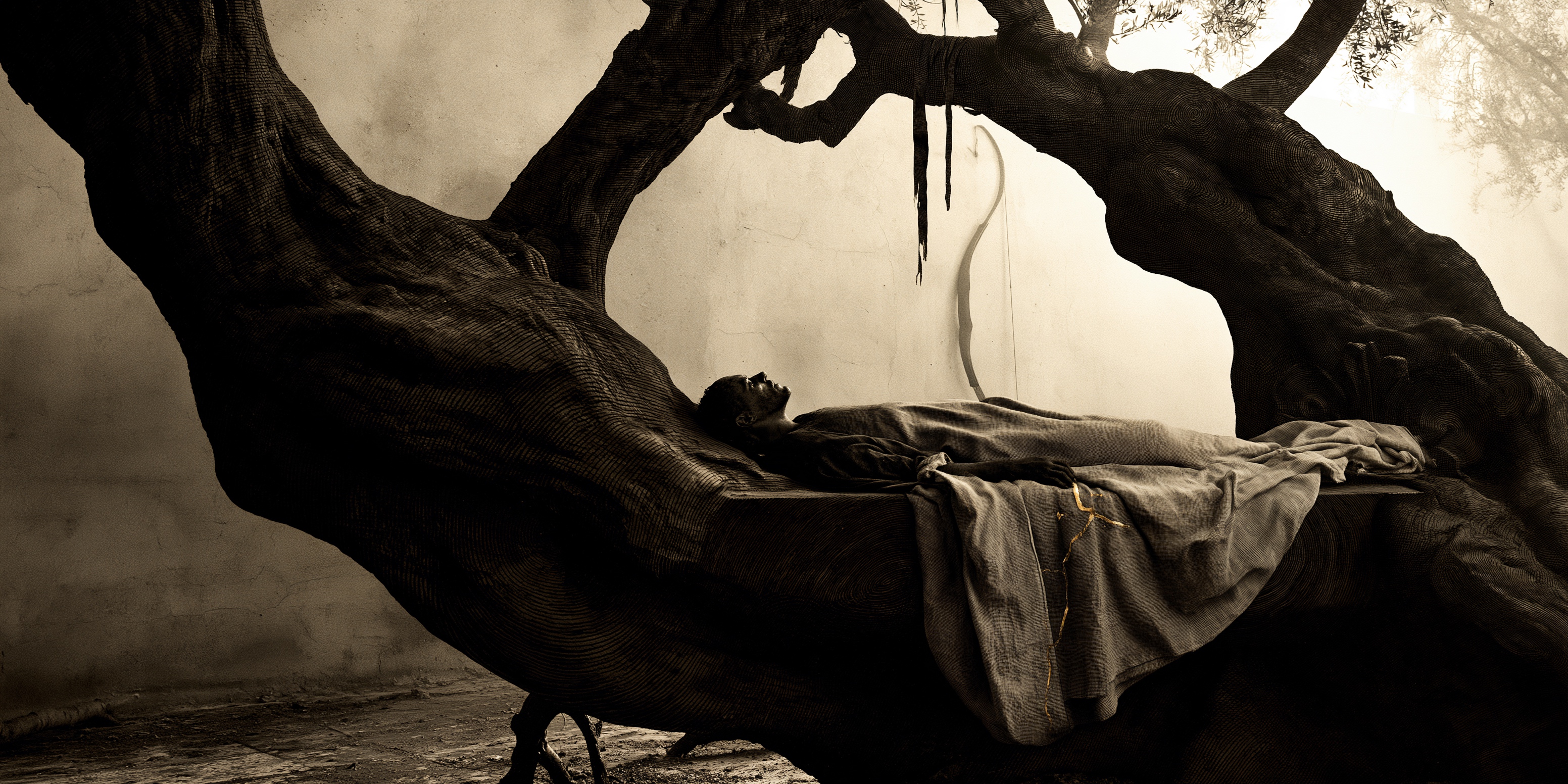
The king comes home after twenty years, and no one recognises him. His old dog lifts its head from the dung heap, wags once, and dies content. The rest of the household offers the war hero table scraps.
This is the final episode about the self, and it is about proof. What remains of a person when status, name and profile are struck out, and how a self proves itself when no one remembers it. Right now Spider-Man too is waking up in Brand New Day, broke and forgotten by everyone, so the question is showing at two cinemas at once. If no one remembers you, are you anyone?
Odysseus chooses to come home in disguise, as a beggar, and the choice is worth pausing on. The man has won a world war and talked his way past gods. He could have marched through the gate with his name carried before him. Instead he puts away the entire CV and enters his own house as the man nobody sees. He wants to know how things stand. He finds out.
The house is full of suitors, men with excellent profiles and glowing references, who have spent years eating his estate and courting his wife. The hero waits, swallows the insults, and watches. Then come the tests, and they are what this episode is really about. Three proofs no database can issue.
The first is the scar. The old nurse Eurycleia washes the beggar's feet, feels the boar scar above his knee, and knows in the same instant who is sitting in front of her. The body remembers. Passwords can be stolen and profiles can be copied, but a scar has to be lived. Identity resides in the flesh as well. That is why fraudsters prefer to work at a distance.
The second is the bow. Penelope announces a contest. Whoever can string the king's bow and shoot an arrow through twelve axe heads wins her hand. The suitors take their turns, men in their prime with excellent self-confidence. Not one of them can even bend the wood. The beggar asks to try, and strings it sitting down. What you can do is harder to fake than what you claim. Skill is identity that can be verified. Your craft, your method, what your hands and head can do with no one helping. That is identification.
The third is the bed, and it is the loveliest image in Greek literature. Penelope, who has waited twenty years and taught herself to doubt everything, tests the stranger one last time. She asks the maid to move the bed out of the bedroom. And the calm man loses his composure. The bed cannot be moved, he says. I built it myself, around a living olive tree. The trunk is one of the bedposts, rooted in the earth. It is the secret only the two of them know, and now she knows. The immovable point, shared by two people. The world's first private key.
Peer Gynt also came home after a long life abroad, and Ibsen had him take stock with an onion. Peer peels it layer by layer, looking for the core, and finds none. Layers upon layers, roles all the way down, and nothing at the centre. The Button-moulder is already waiting with his ladle, ready to melt him down into something more useful. Peer had been everything to everyone and faithful to nothing. Himself enough, for sixty years.
The difference between Peer and Odysseus is not luck, and it is not talent. It is the bed. Odysseus had something in his life that could not be moved without being felled, and he knew where it stood. Peer had taken great care never to acquire anything of the sort. The core of a self is not something you find by peeling. It is something you build, by letting something take root and stay standing.
What saves Peer in the end, in so far as anything does, is that one person held him in her memory all her life. Solveig waited, and in her memory he was whole. Being remembered by someone who could have forgotten you is the last form of existence. There is, these days, an entire research institute that built a marketing science on a closely related insight. We will get to it later in the series, at which point the pun in the title starts paying rent. Solveig got there first.
Peter Parker stands in the same test right now. The world does not remember him. His friends are strangers, his account is empty, his name means nothing to anyone. And the premise of the entire film is that he is still Spider-Man. The core survives the deletion of other people's memories, if it exists. The mask is on the inside.
They are building beds out of mathematics now, incidentally. Names you own yourself, keys only you hold, agreements that cannot be moved after the fact. Useful things, the way rope is useful in a storm, and we will come back to the tools later in the series. But do not confuse the tools with the tree. The olive tree you still have to plant yourself, and it takes twenty years to become a bed.
So this week's exercise is the olive tree test. Write the list of what in your life cannot be moved without being felled. The relationships that have survived weather. The craft that lives in your hands. The promises you kept when keeping them cost you. The method you think with. That is your core, and the list is probably shorter than you would like. Good. Now you know where to invest. It is the one surface no algorithm can switch off.
The man who clung to the mast in episode one sleeps tonight in his own bed, with the sea still roaring outside. It never stops roaring. That is not the point. The point is that his name is not Nobody any more.
And at the cinema this summer, the world's oldest road movie and the world's newest superhero film are premiering at the same time, with the same question underneath. Who are you when the world has forgotten you? We have been telling that story for two thousand eight hundred years, and we are not done with it, because we need it. The long way home is long. It is worth the whole trip. Becoming yourself is not finding something new. It is choosing what you already stand in, and standing.
A footnote from the small print, before the lights come up. Late in Ibsen's play a stranger points and says there stands Peter Gynt. Not Peer. Peter. That was his real name all along, and he swears he is himself, which is what people swear when they are no longer sure. So the superhero at the cinema has a namesake in the old play. Peter Gynt peeled the onion and found nothing at the centre. Peter Parker lost every witness and was still whole. Peer is simply Peter missing a letter. The missing letter, as it happens, is the core.

Mellingsater
Mellingsater is counsel built on method. About the counsel →